Accounting is known as the language of Business organisation and
mainly concerned with the recording and maintaining of the financial data and
communicating the information or data to
the users. Though it is not an easy process as it involves various set of steps
between them. Like it starts from 1].Identifying the transaction 2]. measuring
and analysing the transactions which involves measuring the transactions in
terms of money because as per the money measurement concept only those
transactions, which can be measured in terms of money/monetary terms, can be
recorded in the books of accounts. 3].Recording the identified and measured
transactions in the journal. Journal is a book of primary recording, mainly
concerned with writing the transactions for the first time in the books.
4].Posting the information into ledger accounts which is considered as a book
of secondary entries. 5].Summarising the information by making trial balance
and preparing the income(profit and loss account) and position (Balance sheet)
statement. 6].Communicating the information to the users.
-wallpaper.jpg)
Under the Full disclosure and materiality principles every
material and relevant information that will be useful to the users in making
decision should be disclosed in the proper foot noting style.
Many business organisation are indulge in unethical and fraudulent
activities in the business. They follow fraudulent and manipulative practices.
There are various reasons for indulging in fraudulent activities. Like to avoid
tax liability, to earn more profit and
to earn more and more wealth. One can earn more money in short duration of time
only by applying illegal methods. This was done by many but caught red handed
one day.
Many frauds and scams have come to light in the 21st
century. There is no possibility that accountant in sole proprietorship
or partnership can commit fraud, but yes they can evade tax liability who
knows. Unethical practices arises when law enters into the game. When some
limitations are imposed by law then those limitations are breached and that act
is turned into unethical act. There are no special laws Governing the Sole
propertitorship business and partnership business so they would not indulge in
big illegal matters. But indeed they can also commit some minor unethical
offences like adulteration in products, charging high prices for products,
selling expired products, selling wrong products or giving wrong information
and evading tax liability. Now a days almost all the sole propertitorship
businessman indulge in unethical practices to avoid tax liability. Though
Income tax act 1981 covers their business but they could not be curbed until
and unless the consumer himself become aware. Customers should take receipt of
almost every products purchased, a proof of receipt means income tax paid. But
now a days no customer demands such a receipt because it takes time and thus
such businessman gets an opportunity to avoid tax liability. This is unethical
practice which became very common. And it is difficult to impose control over
such activities, customers are required to become aware about it.

The same unethical practices are committed by lawyers and other
professionals like doctor. They offer services and take payment in cash only,
they don’t accept Bank payment, Demand draft or cheque because they know that
if they deposit the money in Banks then they will have to pay the tax, although
they have no problem in paying the tax, but with payment of tax the taxpayer is
required to site the source of his income and since they take bribe and unnatural
money they can’t expose it so they avoid tax liability and keep themselves
indulge into corrupt and unethical practices. Such frauds are committed by even
famous lawyers and doctors, big politicians and ministers.
Company form of Business is Governed by companies act 1956 and
also Income tax act 1981 imposes various rules on it to be followed. Unlike
other business forms companies are required to publish the account of their
daily business after the end of their business period, which could last ranging
from 3 months to 12 months, in national newspaper. But most of the companies do
it quarterly-that is once in every 3 months. It is obligatory for them to
disclose the information of their business to general public. They are required
to appoint an Auditor, who is a registered Chartered accountant or company
secretary, he audits the accounts prepared by the company to check that company
Is not indulge in any fraudulent activities and not manipulating its figures
and providing accurate and relevant information to its users. Usually companies
do not change their CA/auditor because after auditing he knows about all the
intricacies and secrets of the company and in order to prevent leakage of such information,
companies stick with the same auditor.
It is not like that if a company has an auditor, who is an outsider
& checks companies account, then it
can’t indulge in unethical or illegal acts. Company can also indulge in
fraudulent activities. Like they can manipulate the figures shown in their accounts.
They can inflate as well as deflate the figures. A company can deflate the
figures of its profit in order to reduce the tax liability because tax is paid
out of profit and if profit is reduced then tax liability shall be reduced
ultimately. A company can inflate the figures of profit to show the users that
company is doing well, and to earn goodwill in the market and to increase the
prices of its securities in the market. But these are unethical activities and
company act and SEBI(Security and exchange board of India) imposes various laws
and regulation to keep such activities under control. Some board of directors,
who have knowledge of increase in share price in future purchase shares
immediately and sells them at a higher price later on. SEBI strictly bars this
activity of insider trading by directors, in order to protect the
interest of investors. Even the auditors can commit unethical acts by approving
company committing illegal acts. Like it was done by privatewaters auditors
house in Satyam case. In India Auditors do not face stringent punishment if
found guilty. Not even a single auditor is punished so far by ICAI in India,
and the punishment prescribed for them also is so low- that is Rs.10,000 or 2
years of jail unlike US where the punishment is of 20 years.

We all know about satyam that committed a
real life big fraud through its company maytas. Satyam was specialised in engineering
and product developing IT company, supply chain management, business process
quality, business intelligence, enterprise integration, and infrastructure
management. The company was founded by ramalingam raju. Raju along with his CFO
and other management members showed inflated accounts (cash and bank balances
and profits) to show higher profitability and higher cash reserves of Satyam. They
inflated their profit from 69 crore to 169 crore to show good profitability of
the company.
Then, he also tried to use Satam's money to buy his son's company 'Maytas' at a very high valuation.
Then, he also tried to use Satam's money to buy his son's company 'Maytas' at a very high valuation.
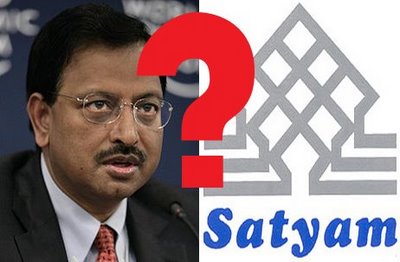
Raju and his family diverted huge funds out of the company on the
names of various business related expenses. They showed that employees
provident fund amount was paid to 53,000 employees which was a wrong figure
instead the actual figure was 40,000 employees, the funds of other 10,000 were
diverted in formation of other companies under the name of Maytas. Satyam was a
technical and IT related company. Its operating profit was just 3% while the
good working other firms had 20-30%, if its operating profit was more, then
also they were diverting the public funds to somewhere. No one could find out
about the fraud. Even privatewaters which was satyams auditor keeps on giving
A+ rating to the company. They then took a big step and announced 100% stake in
Maytas properties and 51% in Maytas infrastructure (which was a company of stayam’s
sons) for Rs.1.6 billion. SO they diverted that much funds into maytas This
investment decision was in gross violation of the Companies Act 1956, under
which no company is allowed without shareholders' approval to acquire directly
or indirectly any other corporate entity that is valued at over 60 percent of
its paid-up capital. Raju illegally transferred huge funds from the company
which belongs to the shareholders.
There is one more scam one should not forget.
Harshad Mehta scam Harshad Mehta was a registered broker
in a stock exchange. He was indulged in buying and sharing of securities on
behalf of customers. New scheme was launched by the central bank called ready
forward (RF) which was a 15 day secured loan involving transactions from Bank
to Bank. One Bank could borrow a short term 15 days finance from other bank by
selling Government securities/shares or debentures, and after 15 days the borrower
bank would purchase back the securities from the lender bank at a slightly
higher price. These transactions are usually done through an intermediary
called as broker. Broker used to perform all the steps on the behalf of both
the bank, sometimes the borrower did not even know who the lender would be.
Borrower bank used to sell the security to the broker who again sell it to the
lender bank and in return the Borrower bank issues BR(bank receipt) as a proof
that the payment has been received by a bank. Broker harshad Mehta made a
profit out of this system. He got fake BR(bank receipt) prepared from some
local and small banks and sold the securities on his own to the banks. He used
the Bank finance to purchase securities heavily which increased the Market
price of the securities and strengthen the bull in the sensex. Then he
purchases the securities back from the bank after 15 day period of RF scheme
and used to sell the securities again in the market at a higher market price.
He succeed in channelizing funds from Banks. Sensex was rising and prices of
securities was increasing. No one paid heed to such unusual thing. Then one day
the scam exposed and market suffered a loss of Rs.4000 crore. Market crashed
with a large amount, many banks were still holding the fake BR(bank receipts)
and did not know what to do next. Many bankers of small banks who issued fake BRs
committed suicide after the scam exposed. Harshad Mehta died in 2002 when many
suits were still pending against him.

That was the biggest unethical scam India could ever face.

Our system needs improvment. We want strict regulations to curb
such activities. Surprise auditors should be appointed to audit the company in
any time. Also rotation of auditors should be made compulsory in every 3 years.
copyright©thelegaltrain
Wow! Believe me I am in love this site! What an easy way to lend money and not even a single stain on your image. I would suggest Bank to every one of you.
ReplyDeleteSimilar to leasing a vehicle, business owners pay a monthly fee to utilize the machine. The monthly fees vary depending on the merchant service provider.
ReplyDeleteThe most ideal path for accountants to prevail with regards to beginning their very own Accounting and Tax CPA practice is by giving themselves the best open door for that achievement.monthly accounting services
ReplyDeleteI will share it with my other friends as the information is really very useful. Keep sharing your excellent work.Accounting Services For Small Business
ReplyDeleteGreat post, your all points fully clarified all topics by this post. These steps are helpful for online accounting services. Thank you for providing such valuable information.Accounting Solutions Company in India
ReplyDelete